
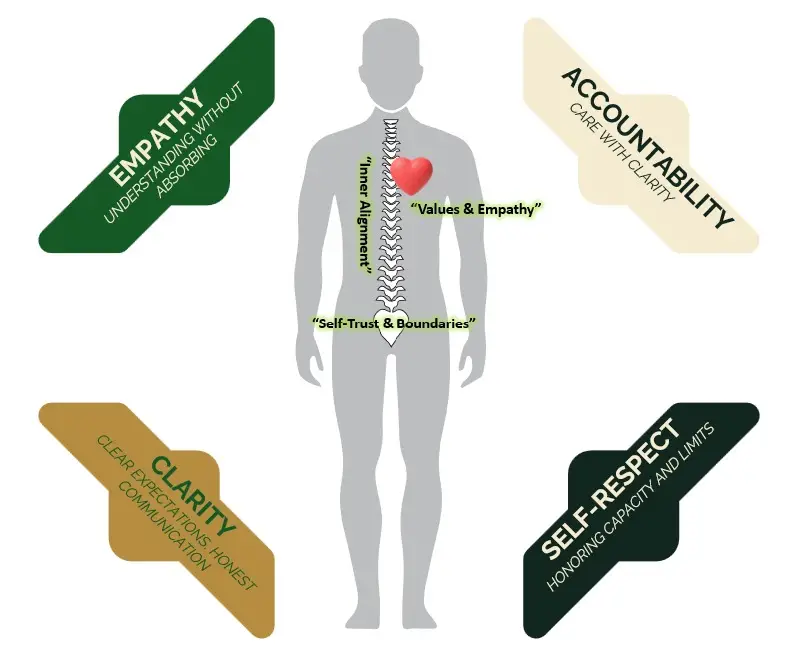
February is often framed as the month of love. But for leaders, creators, and purpose-driven professionals, love isn’t just romantic — it’s operational.
It shows up in how you respond to your team.
How you handle conflict.
How you support others.
And most importantly — how you protect your own energy while doing all of it.
We talk a lot about emotional intelligence in leadership. But rarely do we talk about what happens when empathy turns into exhaustion.
Let’s change that.
What Is Emotional Intelligence — Really?
If you’ve ever searched “what is emotional intelligence” or looked up the definition of emotional intelligence, you’ve likely seen something like this:
Emotional intelligence is the ability to recognize, understand, and manage your own emotions while also recognizing and influencing the emotions of others.
Psychologist Daniel Goleman emotional intelligence research popularized this idea decades ago, especially through his bestselling emotional intelligence book, Emotional Intelligence: Why It Can Matter More Than IQ.
At its core, emotional intelligence meaning comes down to five components:
- Self-awareness
- Self-regulation
- Motivation
- Empathy
- Social skills
These are powerful skills. They are foundational. They are non-negotiable in modern leadership.
But here’s the truth:
Emotional intelligence is the baseline.
Emotional resilience is the differentiator.
Emotional Intelligence in Leadership Is Expected Now
Ten years ago, empathy in the workplace felt revolutionary.
Today, emotional intelligence in leadership is table stakes.
Leaders are expected to:
- Understand their teams
- Handle conflict calmly
- Create psychological safety
- Communicate with awareness
There’s even an entire industry around emotional intelligence training and the emotional intelligence test — tools that help people measure and develop these skills.
And that’s good.
But something is missing.
Because leaders who score high on emotional intelligence tests often still burn out.
Why?
Because empathy without boundaries becomes emotional overextension.
Leading With Empathy Doesn’t Mean Carrying Everyone’s Weight
There’s a quiet trap inside people-first leadership.
It sounds like:
- “I’ll just take this on.”
- “It’s easier if I handle it.”
- “They’re overwhelmed — I’ll absorb it.”
At first, this feels generous.
Over time, it becomes unsustainable.
One of the most overlooked emotional intelligence examples is actually knowing when not to step in.
Resilient leaders understand:
You can validate someone’s feelings
without taking responsibility for their outcomes.
You can support
without rescuing.
You can care deeply
without collapsing your own capacity.
Why Emotional Resilience Is the Missing Skill
So let’s define something rarely searched — but deeply needed.
Emotional resilience is the ability to remain grounded, clear, and steady under emotional pressure — without shutting down or overextending.
If emotional intelligence is awareness,
resilience is endurance.
Resilience says:
- I can feel this, but I won’t drown in it.
- I can listen, but I won’t absorb everything.
- I can lead with heart, without losing myself.
This is where leadership matures.
Boundaries Are Not Cold — They’re Clarity
Search trends show rising interest in:
- setting boundaries at work
- setting boundaries in a relationship
- how to stop people pleasing
That’s not random.
It reflects collective exhaustion.
Many high-empathy leaders struggle with boundaries because they equate limits with rejection.
But here’s the reframe:
Boundaries are not cold.
They’re how leaders stay human.
Without boundaries:
- Emotional intelligence turns into people-pleasing
- Support turns into resentment
- Leadership turns into burnout
With boundaries:
- You respond instead of react
- You support without self-sacrifice
- You model emotional maturity
Resilience protects empathy.
Another Word for Emotional Intelligence?
One rising query is “another word for emotional intelligence.”
You could say:
- Emotional awareness
- Social intelligence
- Relational intelligence
But none of those capture what today’s leadership truly requires.
The better upgrade?
Emotional sovereignty.
The ability to own your emotions
without being owned by them.
The Upgrade: From Emotionally Intelligent to Emotionally Resilient
Here’s the shift:
Emotionally intelligent leaders:
- Understand emotions
- Manage reactions
- Build connection
Emotionally resilient leaders:
- Do all of the above
- And sustain themselves while doing it
They know when to lean in.
And when to step back.
They recognize that every move has meaning — including the decision to protect their energy.
Practical Reflection: Where Are You Overextending?
Ask yourself:
- Where am I absorbing more than I need to?
- Where am I saying yes to avoid discomfort?
- Where does empathy turn into self-neglect?
Leadership is not measured by how much you carry.
It’s measured by how clearly you stand.
Final Thought: Heart-Centered Leadership That Lasts
February invites reflection on love.
But love, in leadership, is not martyrdom.
It’s presence.
It’s clarity.
It’s steadiness.
Emotional intelligence is expected.
Emotional resilience is what keeps you in the room long enough to make a difference.
At Moving With Meaning, we believe:
All moves have meaning — including when to lean in and when to step back.
And sometimes the most powerful move
is protecting your own capacity
so you can continue showing up with heart.